A practical guide to the first half-term for teachers in international schools — from Buckingham International School of Education
Published: August 2026 · Reading time: 5 minutes
Every teacher knows the first day of a new school year is exhausting. Fewer people warn you about the fifth week.
Week one runs on adrenaline. The whiteboard is clean, the displays are up, the resolutions are intact. By week two the timetable has stopped being a document and become your life. By week five, the adrenaline has gone, the marking has arrived, and the year stretches ahead of you like a corridor with no windows.
That stretch is survivable, and how you handle the first month largely decides how the rest of the year feels. Here's what we think can help.
1. What should teachers focus on in the first two weeks? Routines, not content
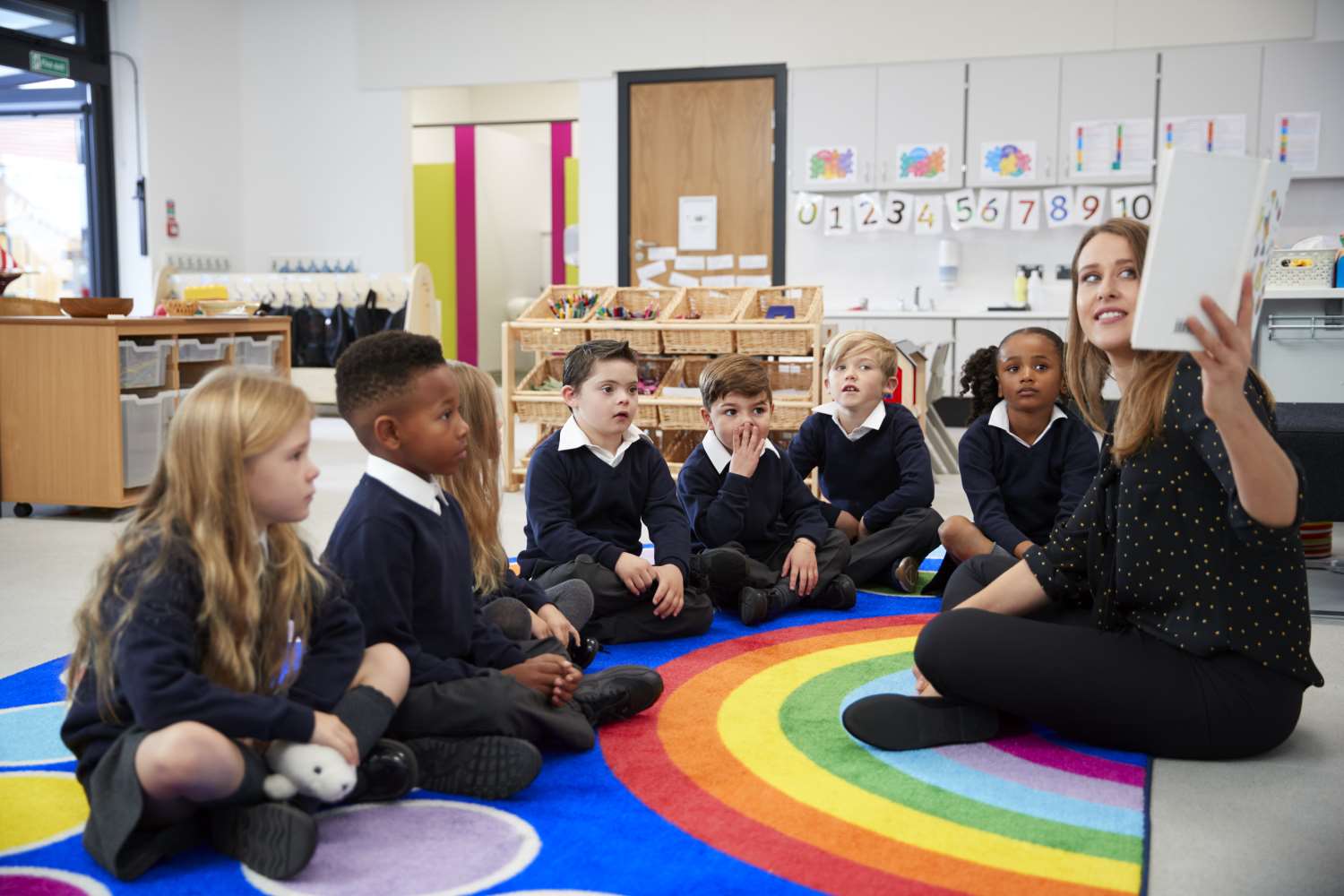 Spend the first fortnight on how, not what. There is a strong temptation to get going on content early, because content is what you'll be judged on by the end. Resist it slightly longer than feels comfortable.
The teachers who look effortless in March are the ones who over-invested in routines in August: how books are handed out, how you get silence, how a lesson starts, what happens when someone arrives late. Every minute spent establishing a routine now is repaid perhaps fifty times over the year. Every routine you skip becomes a small negotiation you have to hold again, and again, every single lesson.
You are not losing teaching time. You are buying it.
2. How quickly should teachers learn pupils' names? Faster than feels reasonable
Set yourself a target: three names per class, per day, learned properly — not recognised, learned. Use them out loud. Ask about something specific.
Names are the highest-leverage relationship tool available and they cost nothing. In an international school, where a class might contain children who arrived in the country three weeks ago and are as disoriented as you are, being reliably known by an adult matters more than usual.
3. How can teachers reduce marking workload? Decide what you are not going to mark
 Most teachers drown in marking — partly because there is a lot of it. But partly because each assignment to be marked is treated the same.
Make the decision explicitly, in week two, in writing. Which pieces get detailed written feedback? Which get a tick? Which get whole-class feedback delivered verbally in five minutes at the start of the next lesson?
This isn't a corner-cutting exercise. The UK’s Department for Education's Independent Teacher Workload Review Group concluded that "there is little robust evidence to support the current widespread practice of extensive written comments," and set out three principles for marking: it should be meaningful, manageable and motivating. The Education Endowment Foundation's review of the evidence goes further, noting that the research base on marking is thin in general — but that "next lesson feedback had a positive impact on student progress."
In other words: the hours you spend writing individual comments are not the part that's well evidenced. Decide accordingly. Then hold the line.
4. Why do international teachers burn out? Because school becomes their whole world
Build the non-school part of your life in term one. This one is key for international teachers, and it's the one people most often forget.
When you move to a new country, your school is instantly your entire social world — your colleagues, your friends, your weekends, your gossip, your identity. It's efficient and it's comfortable, and it's also fragile. If school is everything, then a bad week at school is a bad week at everything.
The teachers who last overseas — the ones still going after eight years — almost all have an anchor outside the gates. A sports team, a choir, a climbing wall, a language class, a hiking group, volunteering, anything with people who don't know or care what happened in Year 8 on Tuesday.
Build it in the first term, while you still have the energy to start things and the excuse of being new.
5. Should teachers start the year at full speed? No — observe first
 Don't try to do everything at once. It can be tempting to start the year at full speed, particularly when there is a curriculum to cover and plenty of administrative work to complete. However, the first few weeks are an investment in the rest of the year.
Give yourself time to observe how your class works. Which pupils need additional support? Who works well together? Where do routines break down? What motivates particular pupils? These observations will help you adapt your teaching more effectively than trying to implement everything from day one.
6. What is the most useful thing a teacher can do in September? Write down what you can't do yet
Reflect and write it down. This is not easy, but it's worth doing, and it's what our trainees often tell us was the most valuable part of their training.
The things surfacing right now — the child you haven't reached, the concept you could only explain one way, the routine that won't hold, the class you dread on Thursdays — are not evidence that it's going badly. They are the clearest, most honest professional development plan you will ever be handed, and it arrives on schedule every single September.
Most teachers never write it down. They just feel vaguely bad about it until June, when it fades, and then it returns the following autumn wearing different faces.
Write it down instead. Three lines in the back of your planner. Revisit it at October half-term. That list — not the school's appraisal form — is the real curriculum of your year.
And finally: sleep is not a reward
 Sleep is not a reward for finishing your work. It is the thing that makes tomorrow's work possible, and it is the first thing most teachers sacrifice and the last thing they should.
The 2026 International Education Recruitment Report found that 60% of international educators have considered leaving the profession because of burnout. That figure isn't a reason for gloom — it's a reason to take the boring, unglamorous advice seriously. Routines, boundaries, sleep, one change at a time, and a life outside the gates.
Have a good year. The corridor does have windows; you just can't see them in August.
Frequently asked questions
What should a teacher do in the first week at a new school?
Prioritise routines over curriculum content, start learning pupils' names systematically, and observe how the class works before changing anything. Ask practical questions early, while being new is still a reason to ask.
How much marking should teachers do?
There is no fixed answer, but the DfE's workload review found little robust evidence supporting extensive written comments, recommending instead that marking be meaningful, manageable and motivating. Deciding in advance which work receives detailed feedback, which receives a tick, and which receives whole-class verbal feedback is more sustainable than treating every piece the same.
Is teacher burnout common in international schools?
Yes. The 2026 International Education Recruitment Report found 60% of international educators have considered leaving the profession because of burnout. Building a life outside school, protecting sleep, and setting boundaries on workload are the most commonly cited protective factors.
BISE (Buckingham International School of Education) offers flexible teacher training and education degrees to international educators across Asia, in partnership with the University of Buckingham — whose iQTS programme received the top inspection grade of '1' and whose QTS provision was rated "Strong Standard" by the UK’s inspection body.
Sources: Eliminating unnecessary workload around marking — Independent Teacher Workload Review Group, DfE, March 2016 · A review of the evidence on written marking — Education Endowment Foundation, April 2016 · International Education Recruitment Report 2026 — Teach Away