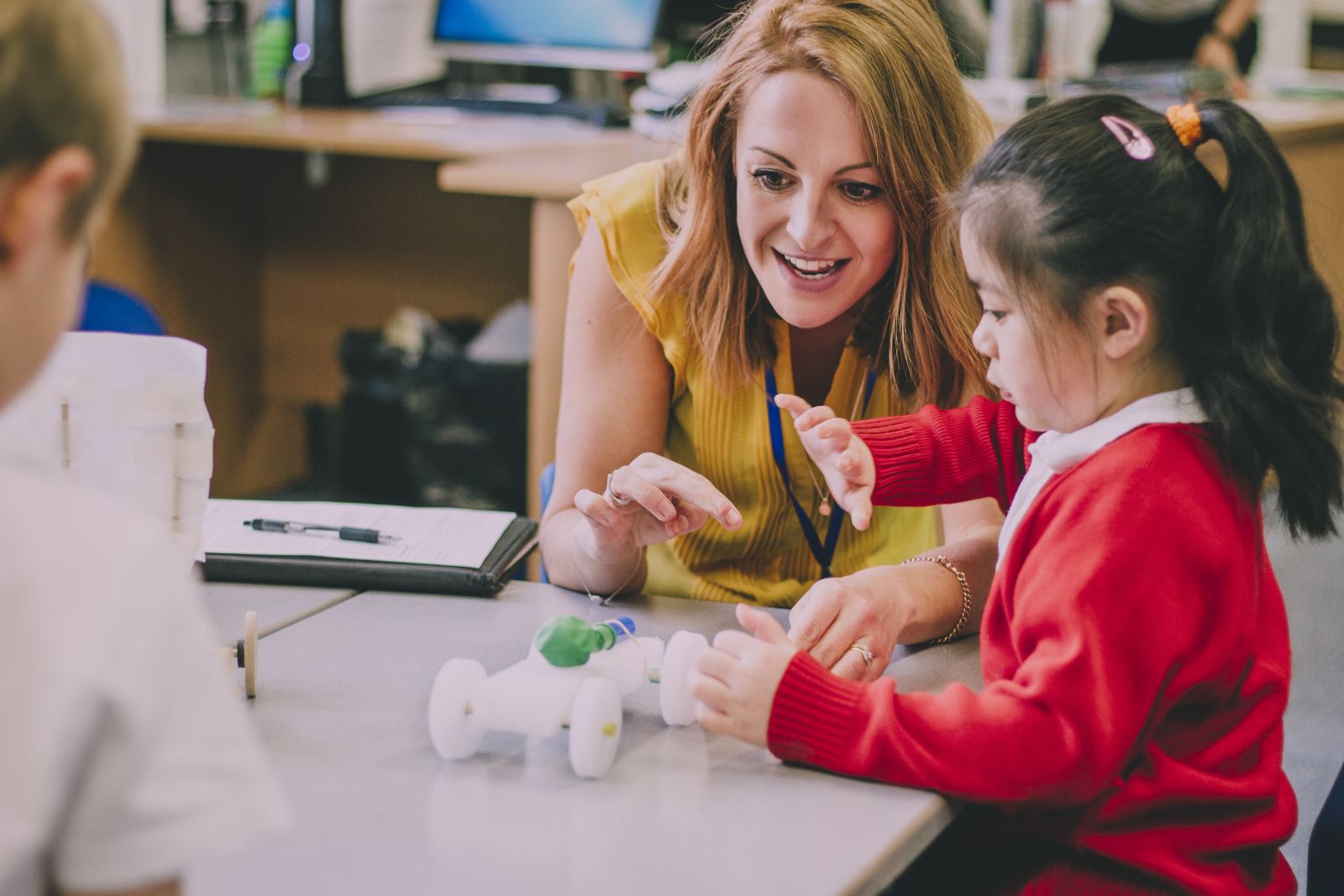
 Recommendations to teachers of the future from experienced teacher training professionals, Prof. Barnaby Lenon CBE and Tracey Smith, of the University of Buckingham.
This is the second of two articles, which outline key takeaways from a new book by Professor Barnaby Lenon CBE, Dean of Education at the University of Buckingham, and Tracey Smith, also of the University of Buckingham.
In this article, we reveal what Lenon and Smith think about teaching 21st century skills, as well as the use of tech vs textbooks in classrooms.
To read the first article on hard work, high expectations and direct instruction, click here.
So-called 'twenty-first century skills'
Key takeaway: “All good schools teach [twenty-first century skills], and you should teach them through your subject.”
Some people argue that we should not be teaching traditional subjects but should instead focus on ‘twenty-first century skills’. These are often presented as generic skills, such as communication and problem solving.
The problem with this argument is that:
- Research shows these general skills tend to be subject-specific. For example, you have to learn critical thinking when studying history, but this is not the same thing as critical thinking in maths.
- Most skills require knowledge. In order to be a critical thinker in history you have to know a lot of history.
-
Many of the so-called twenty-first century skills are actually character traits, not skills, such as teamwork, leadership or perseverance.
- Most of these twenty-first century skills have actually been important for 3,000 years.
-
Of course, there are some skills that truly are twenty-first century skills, such as navigating the internet intelligently and knowing about the merits and pitfalls of artificial intelligence (AI).
All good schools teach these things, and you should teach them through your subject.
 Do computer-based lessons improve learning?
Key takeaway: “Get to know a few digital tools well and use them regularly to good effect.”
Research suggests they are not better than the conventional teacher-in-a-classroom approach. The experience of online teaching during the Covid-19 pandemic told us that younger children cannot concentrate long enough on a screen, older children were often distracted by other things they could find on the computer and all children found working from home on computers to be dull and socially isolating (Howard, Khan and Lockyer, 2021).
When children first use a computer for learning it’s motivating because it is a new experience, but this does not last long. More and more parents and schools in England are becoming concerned about the amount of time children are spending in front of screens of any sort.
Some schools, like the Heritage School in Cambridge, have become popular because the school will not allow computers or smartphones. They have found that pupils concentrate better without these devices, and once they banned screens their GCSE results shot up.
On the other hand, there are plenty of good teachers who use tech well. Sometimes this simply involves doing something in a digital format that may otherwise be done by hand, such as typing notes or presenting using slides. Digital-based techniques can improve teaching quality, such as using multimedia in a lesson or interactive stories to boost understanding. Platforms like Zoom can be used to connect with children and speakers across the world, and Google Earth is of tremendous value to geographers, as is AI for simply finding out about things.
Get to know a few digital tools well and use them regularly to good effect.
Textbooks
Key takeaway: “Libraries and textbooks should be regarded as vital resources in all schools.”
In England, 10% of 10-year-olds are issued textbooks; in South Korea, this number is 99%. In secondary science, 8% of pupils in England are issued with textbooks compared to 88% in South Korea and 92% in Taiwan.
Why are English schools not using textbooks? Cost is a factor, but just as important is the growing use of copied worksheets and handouts. Worksheets have certain advantages, such as being tailored to the class and pupils having to focus on that one piece of paper, but some disadvantages, such as the worksheets being easily lost and rarely organised in the pupils’ files.
Textbooks are dying out because more materials are now available online alongside the emphasis in schools on differentiated learning discouraging the notion of ‘one resource for all’. The demise of textbooks is a downward spiral – if schools don’t buy textbooks, publishers can’t afford to produce them. In the past, a small number of outstanding teachers earned a good living producing wonderful, captivating textbooks, and these people are now being lost to the system.
So, what’s so good about textbooks? Textbooks are better than online resources or paper handouts in several ways:
- They are easier to issue (two minutes at the start of the year) and much easier to refer back to (‘let’s return to page X, which we did last October’).
- They are a big part of the solution for the pupil who joins a course late or misses a large piece of work.
- They are a resource that parents can use to help their children.
- The best textbooks contain exercises, questions and worked examples, making them perfect for setting homework and testing understanding.
- For sixth formers especially, making notes from text is a vital skill they will need at university. With the advent of handouts, fewer and fewer students are learning to make notes.
- Textbooks are far better for revision than handouts, many of which will have been lost.
- Textbooks can be used for differentiated learning – all pupils use the same book but work through it at different rates.
- The best textbooks, like those used for maths in Singapore and Shanghai, lead the pupil and teacher through the syllabus in ways that are extremely effective. They save the teacher hours of lesson preparation time as all the essential materials have been written for you by experienced teachers.
-
If you ask people aged 40 and above if they can remember textbooks they used at school, the answer is usually ‘yes’. But more than just the title of the book, they can remember individual pages and diagrams in the text. Will today’s children be able to say the same of handouts?
Textbooks of the past had a huge impact on education. They not only reflected exam board syllabuses – they influenced them. The best textbooks were the curriculum; they determined the level to which the stronger pupils worked. The materials supplied by exam boards, especially at A-level, don’t pin down the exact level of detail and depth of what a student needs to know – textbooks do this.
A good example of successful textbooks would be Robert Peal’s Key stage 3 history series: in-depth coverage written in a completely accessible way. Libraries and textbooks should be regarded as vital resources in all schools.
Good books go into depth; they elaborate on and clarify what has been taught in schools. They lodge in your mind.
About the Authors...
 Prof. Barnaby Lenon CBE
Prof. Lenon has taught in and lead some of the best schools in the UK, including Eton, Highgate and Harrow. He later helped establish the London Academy of Excellence in East London, one of the most successful state sixth form academies in the UK. Now, Prof. Lenon is Dean of Education at the University of Buckingham, where he spends his time perfecting the art of training teachers.
 Tracey Smith
Tracey Smith taught at Stadhampton and St Francis primary schools in Oxfordshire and then was Headteacher at Bladon, Tower Hill and New Marston primary Schools in Oxfordshire, before becoming Head of Primary Teacher Training at the University of Buckingham. Tracey returned to Headship as Executive Headteacher of two Farringdon primary schools before continuing her work with teacher training and supervision at the University of Buckingham.
Interested in internationally recognised teacher training?
The University of Buckingham’s Faculty of Education supports over 1,300 teachers and school leaders worldwide each year and is consistently recognised for teaching quality, student support and investment in learning resources.
Buckingham International School of Education (BISE) is the sole international partner of the University of Buckingham, Faculty of Education in Mainland China and Hong Kong. Apply for a teacher training qualification or education programme through BISE to gain access to free support services from application through to graduation and beyond.
Visit www.bise.org to learn more.